
Pattern Blindness: The Silent Conversion Killer
19 01 2026

Jason Muller
Senior SEO & CRO Specialist
5 MINS
Introduction
Your landing page looks perfect. Clean design. Strong copy. Clear CTA. But your conversion rate is stuck at 1.8%. You've A/B tested headlines. Tweaked button colors. Nothing moves the needle.
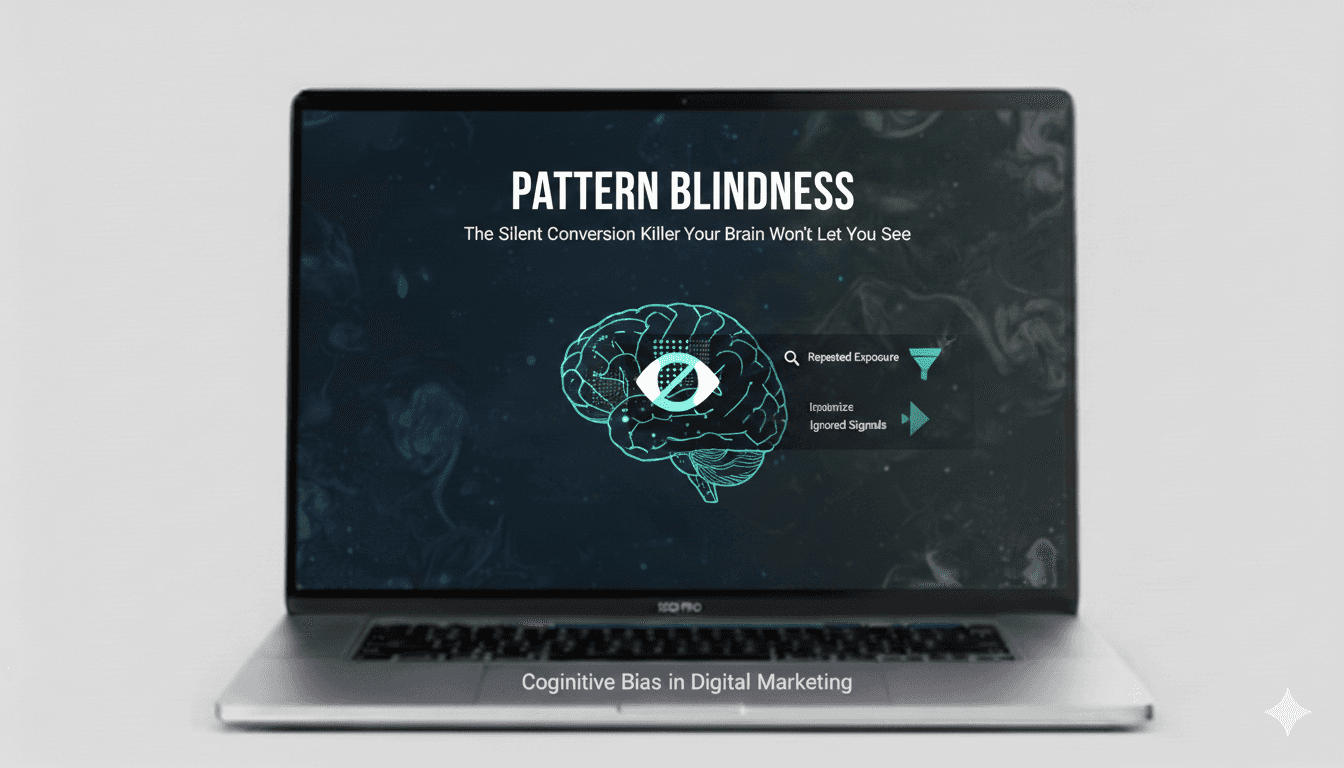
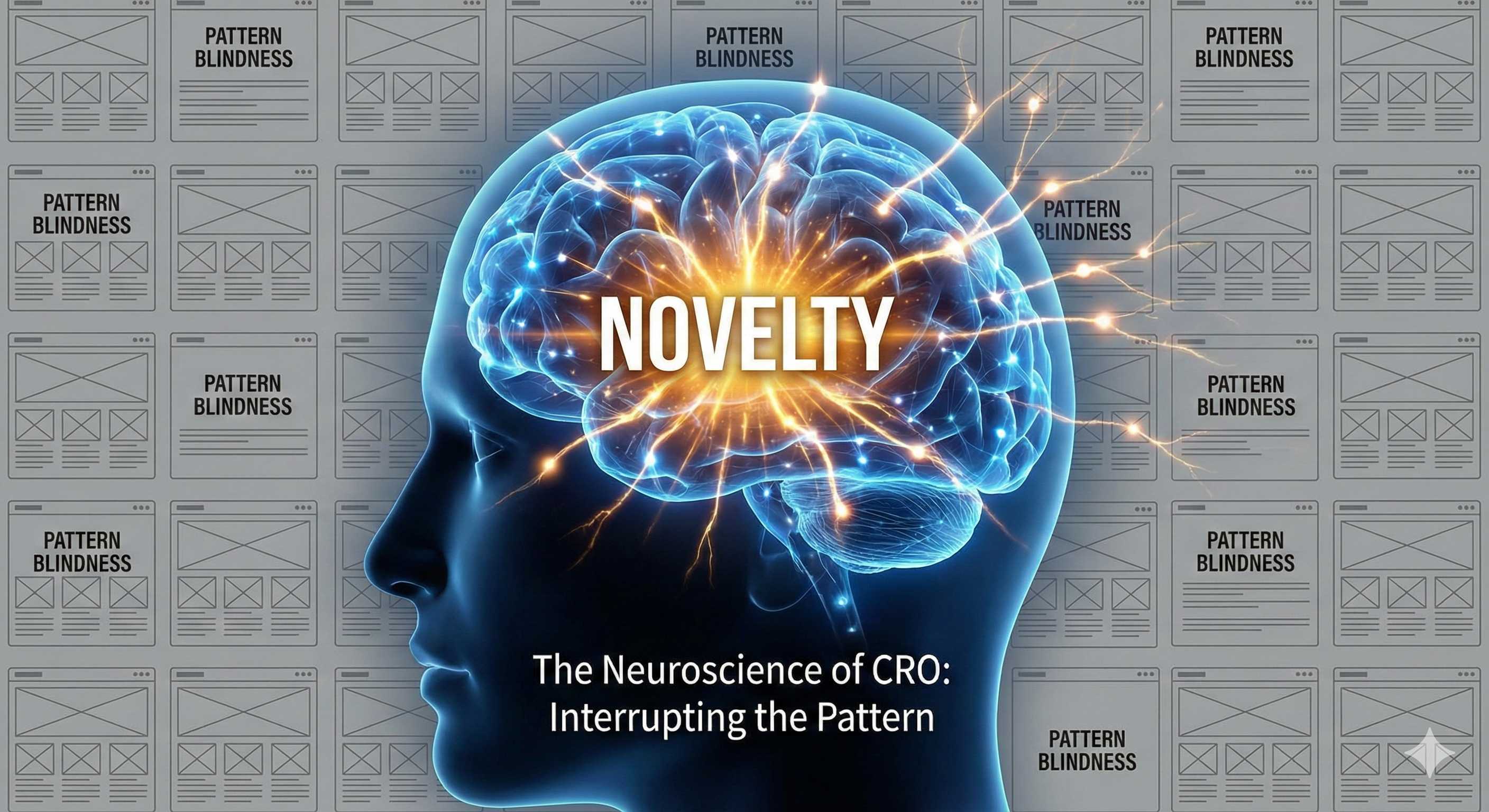
Here's why: Your visitors' brains aren't seeing your page anymore. They're recognising a pattern—and ignoring it. Neuroscientist Wendy Suzuki's research reveals the problem: novelty triggers dopamine, which tells the brain to pay attention. But familiarity does the opposite. Your brain enters power-save mode. It scans instead of reads. And your perfectly crafted landing page becomes invisible.
The Pattern Recognition Problem
Text left, image right, blue button. Your brain has catalogued this exact structure hundreds of times.
Text left, image right, blue button. Your brain has catalogued this exact structure hundreds of times.
Abstract illustrations or product screenshots that look identical to every competitor.
Abstract illustrations or product screenshots that look identical to every competitor.
Three columns. Icon at the top. Short description. Seen it. Skipped it.
Three columns. Icon at the top. Short description. Seen it. Skipped it.
Fix It
Break the pattern where it matters most. Not randomly. Strategically. Win the novelty response first, then feed the analytical brain. Use high-contrast disruption above the fold. Flip the expected layout. Test unconventional CTA colors and button shapes. Place social proof at conversion points, not predictable locations. Your landing page isn't losing because your offer is weak. It's losing because you're invisible before rational evaluation even begins.