

The Brain Behind Your Landing Page: Why Conversions Fail Before Users Think
15 01 2026

Jason Muller
Senior SEO & CRO Specialist
5 MINS READ
Introduction
Your landing page converts at 2%. You've tested everything. But you're optimising for the wrong thing. Most landing pages sabotage the first one before the second one engages.
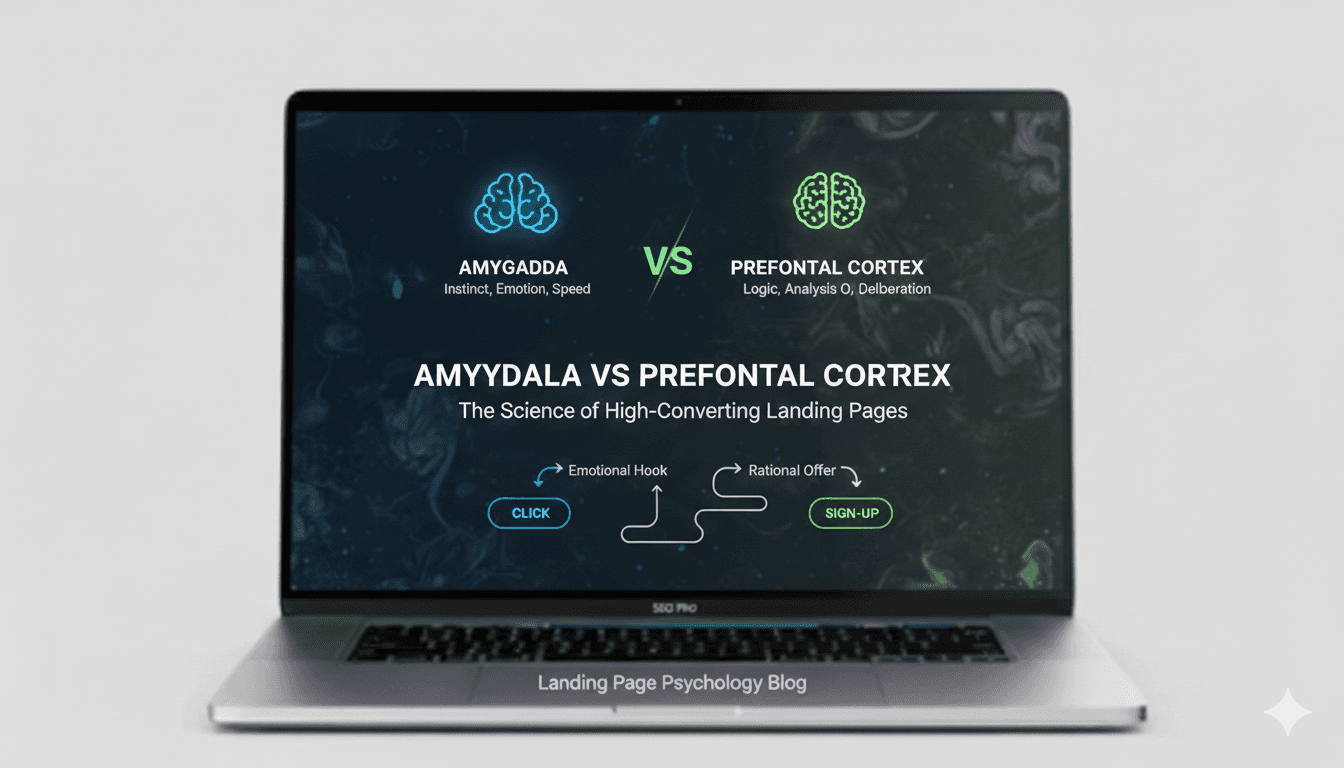
Fast Thinking makes the snap judgment. It asks: "What is this?" "Can I trust it?" It decides in milliseconds. If it says no, your visitor leaves. Slow Thinking is the analytical brain. It evaluates your offer, reads testimonials, checks pricing. But it only activates if fast thinking says "yes." Here's the problem: If you lose the fast brain, the slow brain never wakes up.
Six Reasons Your Landing Page Fails
Slow load times — Your fast brain interprets delay as instability. They bounce before anything loads.
Unclear value proposition — Five seconds in, they still don't know what you do. Cognitive friction triggers distrust.
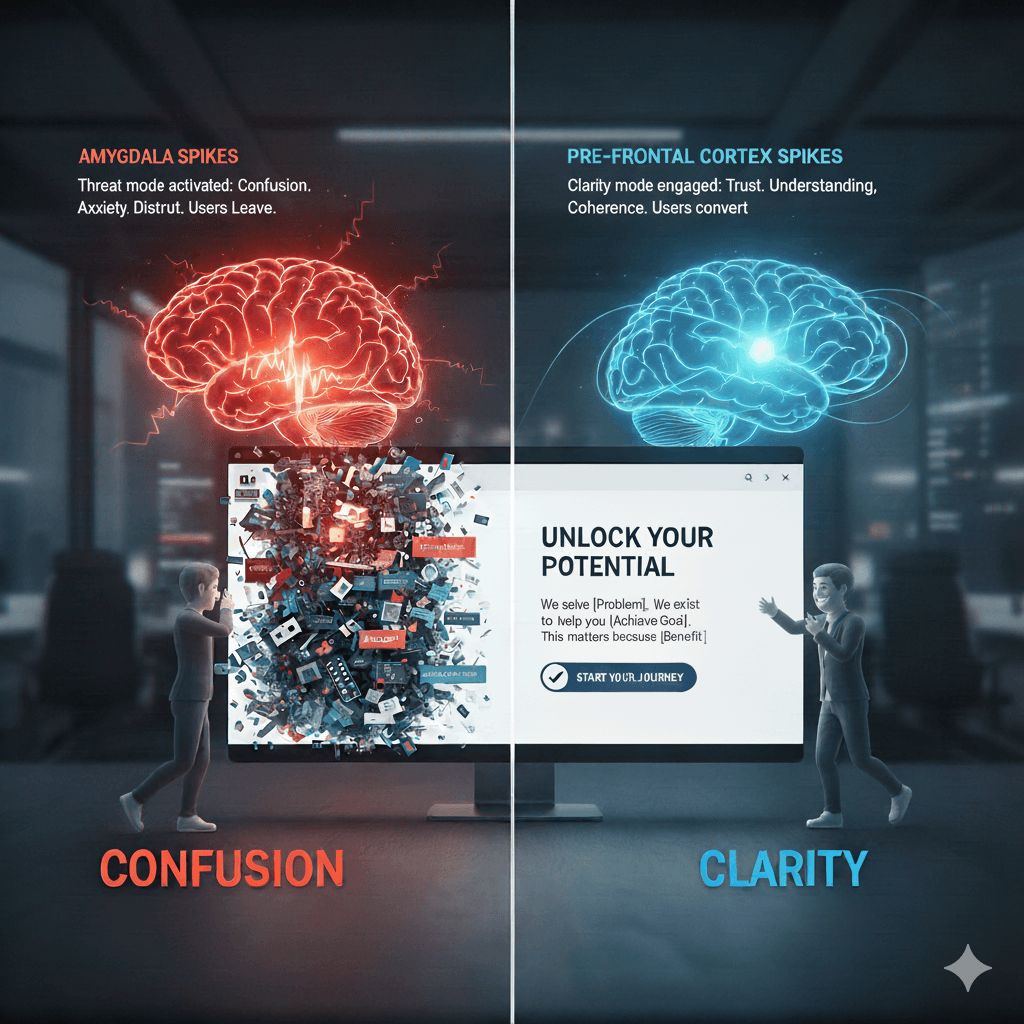
Visual chaos — Too many elements, inconsistent design, competing messages. Fast brain detects chaos. Signal: threat.
Scattered CTAs — Multiple buttons and unclear hierarchy. Fast brain can't decide what to do. So they do nothing.
Social proof in the wrong place — Testimonials buried in a slider somewhere. They need to be at the conversion point where they actually matter.
Hidden pricing or terms — Lack of transparency triggers the threat response. Your fast brain knows something's being hidden.
Fix It
Win the fast brain first. Load in under 2 seconds. Make your offer obvious. Use familiar patterns. Remove friction. Then feed the slow brain. Show social proof near the CTA. Be transparent about pricing. Address their real objection with data. Your landing page isn't losing because your offer is weak. It's losing because you're activating threat before reason even gets a chance.